


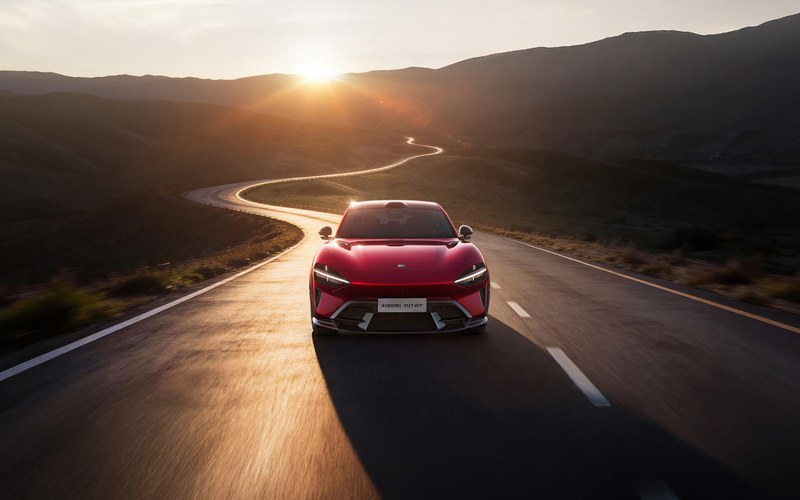
A Zeekr 9X bought in Shanghai and a Zeekr 9X ordered in Munich share a name, but they are not the same car. They differ in powertrain versions, battery capacity, charging inlet, software and – most important for the owner – warranty terms. The same applies to other premium models from China that are entering Europe officially or are only preparing to do so.
Below we set out these differences using the Zeekr 9X, Xiaomi YU7 and Denza Z9GT as examples. The aim is not to declare one version better, but to make buying a China-market car an informed decision: you know what you gain, what you give up and what to ask the advisor before placing an order.
Same names, different cars: the Zeekr 9X
In China the Zeekr 9X has been on sale since September 2025 in several versions, including Max, Ultra and Hyper. The Max has a 55 kWh battery, the Ultra 55 or 70 kWh, and both have two electric motors with a combined 660 kW. The Hyper has three motors producing 1030 kW and a 70 kWh battery. The manufacturer quotes electric range in the Chinese CLTC cycle – for example 380 km for the Ultra with the 70 kWh battery.
The European Zeekr 9X currently comes with a single powertrain: the Ultra AWD with a 55.1 kWh battery and 660 kW (897 hp) of system output. According to the ADAC catalogue it has an electric range of 179 km in the WLTP cycle and charges at up to 11 kW on AC and up to 330 kW on DC. For now, Zeekr does not offer a three-motor version or a 70 kWh battery in Europe. Also bear in mind that the CLTC cycle is gentler than the European WLTP, so ranges from the two cycles should not be compared directly.
First deliveries of the European 9X are planned for the turn of 2026 and 2027. The conclusion is simple: compare specific versions, not just the model name. We cover the 9X versions and performance in detail in our Zeekr 9X buyer's guide.
Max, Ultra, Pro: how to read version names
Version names in Chinese cars do not follow a single logic. On the Zeekr 9X, Max is the entry version, with Ultra and Hyper above it. On the 2025 Xiaomi YU7 it is the other way round: the versions are called Standard, Pro and Max, and the Max is the most powerful. Add to this model years, special editions and name translations on sales platforms, which turn “Max” into “Max Edition”, while a line-up update can give an existing version a new name.
That is why we check a version by its components, not by its name:
- battery capacity and the number of motors – they determine performance and range,
- the number of seats and the seat layout, e.g. 2+2+2 in the Zeekr 9X,
- the model year and the date of first registration,
- driver assistance systems, suspension, wheels, audio and interior packages,
- whether the description matches the documents and the VIN.
If you are unsure about anything, ask the advisor – the configuration is best confirmed before you order.
Software, language, apps and maps
This is the area where differences are least visible in a specification and most noticeable every day. A China-market car runs software designed for Chinese users: the interface, voice assistant, apps, navigation and online services are built around the local infrastructure. The European version of the same model has software prepared for the EU market.
We do not assume in advance what works in a particular car – it depends on the model, model year and software version. Before buying, check:
- which interface languages are available and whether English is one of them,
- whether navigation and maps work outside China,
- whether phone connectivity works: the manufacturer's app, Apple CarPlay, Android Auto,
- whether online services and the voice assistant work in Poland,
- whether the car will receive over-the-air (OTA) updates after registration in Poland.
Ask the advisor about these points for the model you have chosen. If any feature is a condition of purchase for you, say so at the start of the conversation.
Charging: GB/T or CCS2
As a rule, China-market cars have a charging inlet built to the Chinese GB/T standard, and the cars we import have exactly this inlet. European versions use a Type 2 inlet for AC charging and CCS for DC fast charging – the standard supported by public infrastructure in Poland. The 9X illustrates this well: the Zeekr 9X sold by Azja Motors has a GB/T inlet, while the European 9X, according to ADAC, has Type 2 and CCS inlets.
For a plug-in hybrid such as the 9X, this mainly means driving mostly on petrol unless you arrange a suitable way to charge. For an electric car such as the Xiaomi YU7, the inlet standard decides where and how quickly you can charge. Solutions with GB/T adapters exist, but their capabilities and conditions of use need to be checked for the specific car – ask the advisor. We cover this in more detail in our article on drivetrains and charging cars from China.
Manufacturer’s warranty: what not to assume
The factory warranty a manufacturer gives on the Chinese market applies to cars sold and serviced in China – you should not assume it applies once the car has been imported to Poland. European versions carry a warranty through the official network: for the European 9X, ADAC lists 5 years or 100,000 km for the car and 8 years or 200,000 km for the high-voltage battery. These are terms for cars from European distribution.
With a China-market car, check before signing the contract whether it includes a warranty and on what terms: what it covers (drivetrain, battery, electronics), where faults are reported and what the exclusions are. We write more about warranty, service and parts in a separate guide.
When the China-market version makes sense
The China-market version makes sense when you want a configuration that is not available in Europe or that you would have to wait for – for example a Zeekr 9X with the 70 kWh battery or three motors – and when you knowingly accept Chinese software, the GB/T inlet and the absence of the manufacturer’s factory warranty in the EU.
Xiaomi has announced its official entry into Germany and other European countries in 2027, so today the YU7 can only be bought in Poland as an imported car. You can configure the Xiaomi YU7 and the Zeekr 9X in the specification you want with us straight away.
The European version will be the better choice if what matters most to you is a factory warranty in the dealer network, CCS charging without extra solutions, software in European languages and European type-approval data (WLTP), which may matter for company accounting, among other things. The Denza Z9GT has been officially offered in several European countries since April 2026 – it is worth comparing both routes calmly. You can configure the China-market Denza Z9 GT with us.
FAQ
Is the Chinese version of a car worse than the European one?
Not necessarily. It often has different powertrain versions and richer configurations than the official European range. It does, however, differ in software, charging standard and warranty – and these are what you need to assess before buying.
Can the interface of a car from China be set to Polish?
It depends on the model and the software version, so we do not give a general answer. Check the available interface languages with the advisor for the specific car.
Does the Chinese Zeekr 9X have a CCS inlet?
The Zeekr 9X imported by Azja Motors has an inlet built to the Chinese GB/T standard. The European version of the 9X has Type 2 and CCS inlets.
Is the Chinese manufacturer's warranty valid in Poland?
You should not assume so. Ask the advisor about the terms before you order.
How do I check which version a specific car is?
By its equipment, battery capacity, number of motors, model year and the data in its documents – not by the version name alone. If in doubt, the advisor will compare the description with the car's documents.
Would you like to compare a China-market version with its European counterpart? Configure your car or contact an advisor – we will help you judge whether the differences matter in your case.